
How does salary sacrifice work and what will change from April 2029

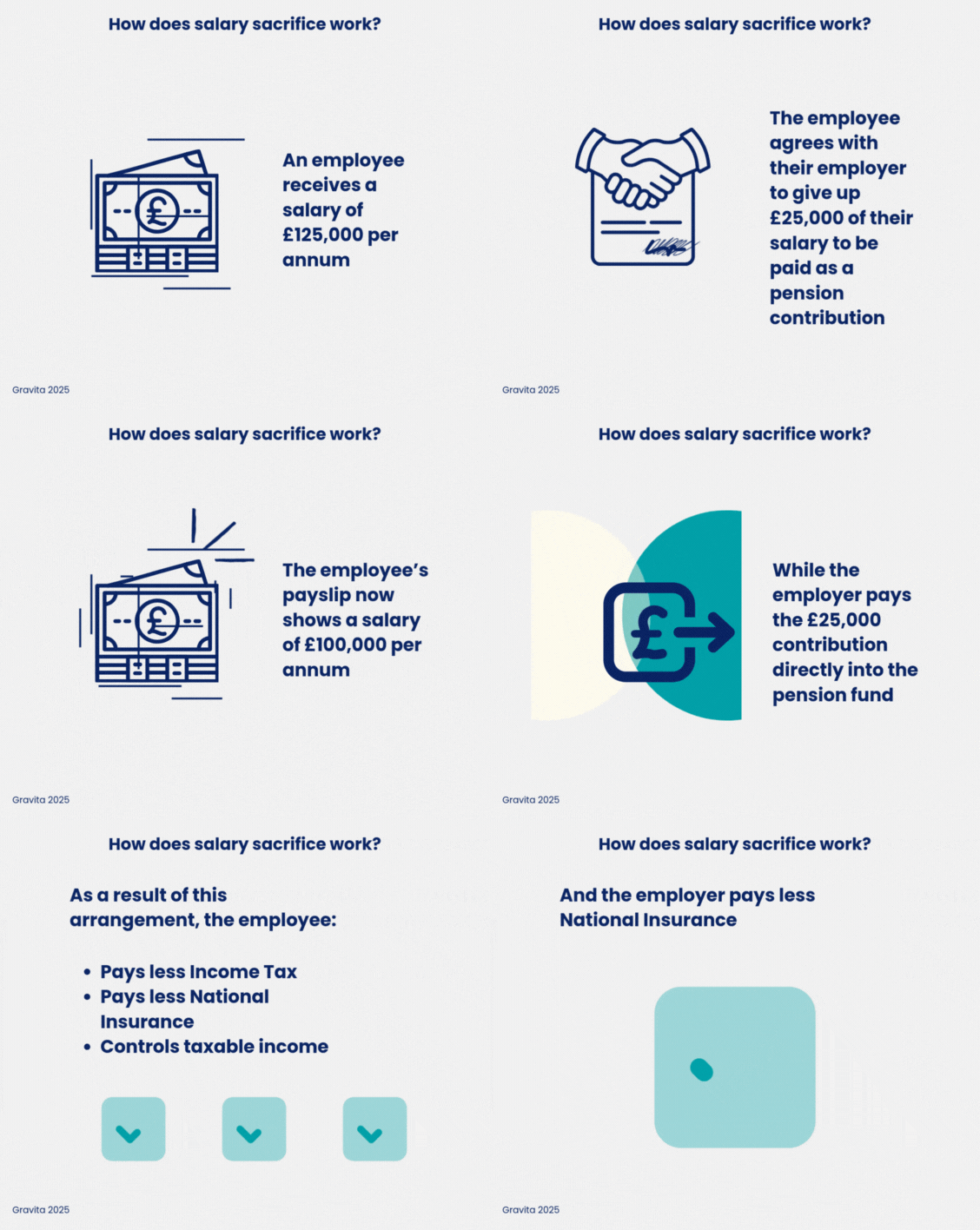
Under a salary sacrifice arrangement, an employee agrees to forgo part of their salary in exchange for an equivalent pension contribution paid directly by their employer.
What are the benefits of using salary sacrifice arrangements before the April 2029 changes?
Currently and up until proposed changes from April 2029, pension salary sacrifice delivers several advantages:
- Income Tax and National Insurance (NI) savings for employees, since contributions are made before tax
- NI savings for employers, who pay less on reduced gross salaries
- An opportunity for employees to manage taxable income and remain below key thresholds – for example, keeping income under £100,000 (where the personal allowance is lost) or £60,000 (to retain full Child Benefit entitlement)
Changes to salary sacrifice schemes as announced in the Autumn 2025 budget
However, as announced in the Autumn 2025 budget, employees are now set to face additional tax on pension contributions made through salary sacrifice.
Under the proposed changes, pension contributions made via salary sacrifice – which are currently exempt from National Insurance – will begin to attract NI charges once they exceed an annual threshold of £2,000. While the threshold offers some limited protection for lower contributions, the move represents a clear erosion of a long-standing incentive designed to encourage pension saving.
It is important to note that, income tax relief will continue to be had in full on salary sacrifice pension contributions, this proposed change if to cap the National Insurance saving only.
Perhaps most striking is the timing. These measures are not scheduled to take effect until April 2029, coinciding neatly with the expected timing of the next general election. This delayed implementation has raised eyebrows, with critics suggesting the political calculus is hard to ignore.
Illustrating the effects of the changes to salary sacrifice brought by the 2025 Autumn Budget
Example One
An employee earning £40,000 who sacrifices 5% of salary (£2,000) for pension contributions would be unaffected.
Example Two
A higher earner on £125,000 sacrificing £25,000 to a pension, to bring taxable income below £100,000 (a common tax planning strategy) would face an additional £460 in employee NI each year, while the employer’s NI bill would rise by around £3,450.
What about owner-managed businesses?
The proposed £2,000 limit is targeted specifically at salary sacrifice arrangements, where an individual agrees to reduce their contractual pay in return for an employer pension contribution.
That approach is not how many owner-managed companies operate. Directors often receive pension contributions paid straight from company profits, without altering their agreed salary. Where no reduction in contractual pay has taken place, the arrangement may sit outside the scope of a salary sacrifice altogether.
In these circumstances, the proposed National Insurance charge is less likely to bite. However, much will depend on the final drafting of the legislation and whether further rules are introduced to prevent perceived workarounds before the changes take effect in 2029.
Given the potential for change, it remains important for directors to regularly review how their pay and pension arrangements are structured.
Why the proposed salary sacrifice reforms matter
Overall, this proposed measure represents a double blow for both employers and savers. Coming on the heels of recent increases in employer National Insurance, the proposed changes would further intensify cost pressures for businesses.
At the same time, individuals face diminishing incentives to save, particularly as pension funds are set to fall within the scope of Inheritance Tax from April 2027, a shift that risks undermining confidence in long-term retirement planning.
While the Treasury may gain in the short term, placing further limits on salary sacrifice risks weakening the UK’s savings culture, penalising responsible savers and the employers who support them.
How Gravita can help
With changes not due to take effect until April 2029, there is still time to review and, where appropriate, restructure pay and pension arrangements. Gravita works with employers and directors to assess the impact of the proposed salary sacrifice rules and consider practical options well ahead of implementation.
Similar Insights

Pillar 2: Multinational Top-up Tax and Domestic Top-up Tax Registration requirements

Tax due diligence for UK companies

The Capital Gains Tax Targeted Anti-Avoidance Rule (CGT TAAR)
Sign up to Gravita's latest updates and newsletters
Stay up-to-date with our event invites, latest news and updates, straight from Gravita's experts.